Suzanne Edison, MA, MFA

Poet • Educator

  • Suzanne Edison, MA, MFA
  • Home
  • About
    • Resumé
    • Contact
  • Blog
    • Poems
  • Teaching & Consulting
    • Events & Workshops
    • Testimonials
  • Resources
  • Poetry
    • Poems-Acknowledgements of Publication
    • Poetry Books

March 27, 2016 By Suzanne

Writing as a Righting Journey-Moving Forward

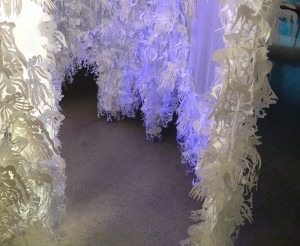
paper cut show-MFA BostonWhy write.

I’ve written about writing and healing often. Writing workshops are what I now offer to other parents as a way of containing and expressing our experiences living with a child(ren) who has a life threatening or chronic illness. I recently came across an article on this subject on the Foundation for Art and Healing website from last year. I was reminded about Dr. James Pennebaker’s research on this subject and I want to go back and reread his work, Writing to Heal, now. You may find it of interest also.

There are many powerful reasons to write, but HOW we write is as important as the writing itself. Being able to construct a narrative from our emotions, or use metaphoric language as a container for the hard to express feelings, allows us to gain some perspective on what may feel overwhelming. I think it allows us to move from feeling to cognition.

I structure writing exercises so that participants have the time to let down into their feelings and experiences, but also have the opportunity to create a meaningful story or poem that provides a container for feelings. This sort of writing engages the prefrontal cortex, that part of our brains where decision making and discernment reside. This capacity to feel and contain is necessary for making judgements about treatment plans, advocating for our child’s needs and for adherence to the treatment plan. It helps move us from despair or depression about our circumstances to resilience and repair.

There is a caveat. Most of us don’t move through our feelings of grief or loss, anger or depression once and then never feel them again. We come back again and again to these experiences as our children get better and grow or don’t. Hopefully, writing allows us a mechanism for continuing to better understand what we feel and what we need for our own self-care and for our children.


Filed Under: teaching Tagged With: healing, James Pennebaker, narrative, poetry, writing

July 14, 2015 By Suzanne

Ekphrastic Writing and Hospital Settings

Crossing Paths--Dinh Q. Lê, 1997
Crossing Paths–Dinh Q. Lê, 1997

For many, the word ‘ekphrastic’ is hard to find in a dictionary let alone hear its usage in daily speech. Ekphrasis, a Greek word, is a form of writing about art, defined by The Oxford Classical Dictionary as “the rhetorical description of a work of art.”

Edward Hirsch, in his book, The Poet’s Glossary, goes on to say that “The prototype of all ekphrastic poetry is Homer’s description of the shield that Hephaestus is making for Achilles in the Iliad.”(p.195)

Many, many poets and writers from Homer, to W.H. Auden, to William Carlos Williams to Marianne Moore, Anne Sexton, and Ted Hughes have chosen to write about works of visual art housed in museums and galleries. There are various approaches to ekphrastic forms and many points of view, well articulated in Twentieth Century Poetry and The Visual Arts by Loizeaux. But, no one that I know of has written a treatise about viewing art in hospital settings.  This the area I have chosen to write from and about.

Anyone who has followed my writing life knows I am very interested in the intersection of art and healing, and in continuing this passion, I began an ekphrastic writing project last January at Swedish Hospital in Seattle (though their new campus in Issaquah also houses a collection), then moved on to Harborview and the University of Washington Medical Center’s art collections. All of these facilities are blessed with wide-ranging forms of visual art from paintings, to sculpture to glass, mixed media and fiber arts. Most of the artists are from the Pacific NW region though there are a few from outside it.

I spent 5 months touring these hospitals, taking pictures and writing poems and essays about various pieces of art, and my reflections on viewing art within a hospital setting. In the coming months I hope to share a few of these pieces with you.  In the meantime, here is the philosophy that the U of WA Medical Center states about art and healing:

Art is everywhere in our world and art is essential. Viewing and creating art, as well as listening to music, play an important role in mental, physical, emotional and spiritual health. A growing body of evidence indicates that the presence of artwork, artists and art experiences in the patient-­‐care environment benefits patients and their loved ones. Art provides a positive diversion, inspires hope, and contributes to an atmosphere of healing and restoration. In the hospital setting, art addresses the health of the human body and spirit, reminding us of the human connections, life experiences and memories that can support and comfort us as we confront illness.

I encourage you to find your way to one of these locations (not as a patient, hopefully) and take a look for yourself. You are free to wander the halls and clinic waiting rooms where you will find an abundance of pieces. If people ask if they can help you (which is a common question) tell them you are there to view the art. The more they hear this, the better for the life of the collections..

Filed Under: Art & Writing Tagged With: Ekphrasis, healing, Hospital Art

December 9, 2014 By Suzanne

I’m Done Falling

This could be the anthem for the entire session of Teens Writing from the Heart of Illness & Healing.

I'm Done Falling photo

This is the cover of the anthology of the teen’s writings. After 8 weeks of reading and writing prompts in which a diverse group of students gradually opened up about the health issues they deal with, through their writing, we gathered them into this final version.  They were a reticent group to begin with, or perhaps, just more reserved overall than the previous two groups, and they came from the eastside of Lake Washington, Beacon Hill and the central area in Seattle.

The poem from which the title was taken was written by a senior in high school. It was actually the last thing she wrote, written surprisingly quickly from a prompt on the second to last session that my co-teacher, Aaron Counts provided. The prompt started as a way to get them to write a brief biography of themselves in 24 words. In each successive version they had to reduce the “biography” by half, eventually whittling it down to one word.  Then, they were to take that one word and write a poem from it. Falling is the name of the poem and I am including it (but not the author’s name)  here.


Falling


Falling into a dark hole.

Someone catch me,

don’t let me fall.

Catching myself fast

to try and land on my feet.

Maybe falling feels better,

not knowing where I’m going

Fear, discomfort, curiosity, darkness.

I’m done falling, I landed on my feet.

I made it, but I’m not done,

I never am.


For a copy of this anthology or any of the other two, please let me know. I am especially happy to get them into the hands of anyone working with chronically ill kids in any setting..

Filed Under: poetry, teaching Tagged With: healing, teen poems

August 17, 2013 By Suzanne

The Art of Losing

I highly recommend a book of poetry edited by Kevin Young called The Art of Losing: Poems of Grief and Healing.
The title is from Elizabeth Bishop’s poem One Art. I got a hardback version at a book closeouts website through Amazon (forgive me independent bookstore lovers) for about $8 + shipping.

I want to quote Kevin’s opening lines in his introduction as a way to bring you into wanting to also get the book.
“I have begun to believe in, and even preach, a poetry of necessity. This is a recognition not just of the necessity of poetry to our lives, but also the fact that necessity is what drives most of the poetry that matters, or the way that it matters.” And, “a poem must be willing to be unwilled, beckoned by need.”

And this book is filled with poems driven by need: elegies, remembrances, dedications, words that attempt to point towards the things that are often unspeakable, or seemingly feel that way.  I love the way I am drawn to think about other forms of art, painting and music, as I read different poems. I thought about Ad Reinhart and his seemingly monochromatic paintings in all black and all red. They beg us to be absorbed into them, by them. They seem to hover around those “almost unspeakable realities” and yet, we keep trying to find the words and images, sounds and visuals to express our ineffable lives.

The Art of Losing is a remarkable compilation of poets living and dead, from W.H. Auden, Emily Dickinson, Anne Sexton to Dean Young, Robert Hass, Lucille Clifton, Adam Zagajewski, just to name a few. And there are so many, many more.  For what greater mysteries are there than death, love and living.

As William Faulkner is quoted in the opening section called Reckoning:

Between grief and nothing, I will take grief.

Theodore Roethke says in the section, Recovery:

I learn by going where I have to go.

And finally, Philip Larkin opens the last section, Redemption with:

What will survive of us is love..

Filed Under: Art & Writing, literature review, other writers, poetry Tagged With: grief, healing, poetry, writing

  • « Previous Page
  • 1
  • 2
  • 3
  • 4
  • 5
  • Next Page »

Events & Workshops

Available to Teach Writing Workshops for Caregivers, Patients, Medical Providers

Workshop Opportunities: FREE

All things Books, Poems, Teaching/Workshops etc.

SEE MORE

Recent Posts

Nature of Our Times

September 21, 2025

Photo Poems

May 3, 2025

Mental Health and Juvenile Myositis

November 29, 2024

Poems in the World, Readings, Teaching

March 15, 2023

Book Reviews–Since the House Is Burning

October 1, 2022

Follow Suzanne

  • Facebook
  • LinkedIn

Post Categories

Blog Archives

  • Contact Suzanne
  • Connect on Facebook

Copyright © 2026 Suzanne Edison Site by LND · Banner artwork by Leslie Newman