Suzanne Edison, MA, MFA

Poet • Educator

  • Suzanne Edison, MA, MFA
  • Home
  • About
    • Resumé
    • Contact
  • Blog
    • Poems
  • Teaching & Consulting
    • Events & Workshops
    • Testimonials
  • Resources
  • Poetry
    • Poems-Acknowledgements of Publication
    • Poetry Books

May 17, 2013 By Suzanne

Brain Review

After reading a blog post of mine, I was recently contacted by a woman, Allison Morris, who has made a simple graphic  (at onlinecollegecourses) of the brain to help people understand the supposed functions of each area.  While I applaud this lively experience I am reminded by Joseph LeDoux, in The Synaptic Self, that the brain doesn’t only have discreet areas of operation, it is in the synapses that information is recorded and stored and then transferred to other areas of the brain and to the genes themselves.  Here is a statement by him:

Synapses are the spaces between brain cells. But more importantly, they are the channels of communication between cells that make possible all brain functions, including perception, memory, emotion and thinking.

It’s practically a truism to say the synapses underlie personality since synapses underlie everything the brain does. More important yet: synapses are the sites of storage of information, including information that is encoded by our genes and also by our experiences — our memories.

When it comes to personality, genes and experience are just two ways of doing the same thing — wiring synapses. That’s why I say, To the extent that we are a product of our genes and experiences, we are our synapses.

This doesn’t mean that the essence of who you are is encoded at a particular synapse. It means that your self is a very complex pattern of synaptic connectivity in your brain.

In thinking about how emotion, writing and the brain come together, this man has pushed my understanding along quite a ways.  If this area interests you, I highly recommend his other book, The Emotional Brain too..
Filed Under: brief thoughts, literature review Tagged With: Emotions & Brain

May 14, 2013 By Suzanne

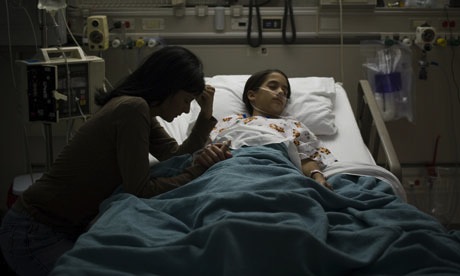
A case for writing about children with chronic and/or terminal illness: from a parent and poet’s perspective

A-mother-with-a-sick-chil-001

Writing and talking about our children with chronic illness is a difficult topic for many of us. For too long this topic was whispered about, pity and fear being the prevailing feelings of those who have typically developing and healthy kids.  But those of us who have children living with chronic and/or life threatening illnesses are learning to speak out about our lives and experiences.  And I for one, think it is healthy and important to expand the conversation about not only “acceptable” topics of discussion and art but also about the enormous role that health and illness play in our economy and society at large. If we can’t speak, listen and discuss these issues, we can’t affect change in them either.

Since this is a big topic, let me start small and personal. Here is an article by Maria Kefalas about her life with a terminally ill child, one of three children.  She has profound insights about mothering in general.  These are some of the frequently cited “silver linings” that many of us come to learn when we have a child with an ongoing health challenge and is an important piece of the dialogue between all families, not just ones with special needs kids.

Emily Rapp, whose son Ronan recently died from Tay-Sachs disease, has written extensively about her journey with her son. Most recently she wrote an article about writing about grief, pain and loss itself. As a writer, she has had to negotiate that line between raw, undigested feelings, catharsis and transforming feelings into art, again, making the case that we need to not only express and channel these feelings, but in so doing, we enlarge society’s understanding of the human condition.

This past week I read some of my poems to an unfamiliar audience in a local library reading series. These included poems about my journey, and others I’ve met and interviewed who are parenting a child with a chronic illness.  The room was silent, not even an “ahh”, or a sigh could be heard during some of the usually more painful passages.  Laughter though, was expressed in “appropriate” moments.  I was struck by the difference in this audience from others.  Were they more shy?  More embarrassed, taken by surprise?  Hard to know.  I know the material is powerful, provocative and that I read it clearly and straight forwardly. A comment by an unknown audience member afterward, who had a hard time expressing his feelings but wanted to let me know he “felt” for me, made me think that when the material is painful, most people don’t know how to respond.  This was not true of my audience at a local children’s hospital or even among a large group of nursing students.  But those audiences are more “schooled” in illness and the emotional effects of it on families.

In the book Writing and Healing: Toward an Informed Practice,  essays about the need for, and success of, integrating personal narratives about traumatic experiences in creative writing programs are explored. I find this heartening, it is a way to build emotional intelligence and muscles in our future readers and listeners.  Here is a quick outline of the book:

“We expect poets to craft art from suffering, but do we allow ourselves or our students to go this route? In this new book Charles Anderson and Marian MacCurdy compile 15 essays written by and for writing teachers and others who have experienced or would like to encourage writing and healing in a variety of settings, classrooms, substance-abuse treatment centers, AIDS support groups, and elsewhere throughout our communities.The essays explore particular writing practices and present theories that support writing as a way to approach and understand difficult situations, such as grief, death, and illness.

The editors recognize and address the conflicts inherent in promoting expressive writing and argue convincingly for the inclusion of personal and political concerns in the writing classroom or other settings. Writing and Healing provides a unique occasion for teachers, scholars, and other professionals to begin an open, serious conversation about the healing power of writing.”

A friend, well known poet and MacArthur Fellow, Heather McHugh, recently started an organization called Caregifted, to give long term caregivers a respite from their ongoing, life path of caring for chronically ill or special needs children.  Her understanding about the societal impact of special needs children and their caregivers is acute and based on a relationship she has with a godson and his special needs child.  Her take on the need for compassion and understanding is this: “Compassion? useless without practicum.”

But how do we move towards action if our capacity for feeling and thinking about these issues is stunted? How do we begin to talk about the issues if we have not read or listened to others discussing the impacts of life threatening or chronic illness on families?  It is to these points that I say, we can’t. We must write and speak out. We must learn to tell our stories, to imbue the personal narrative with a larger political and social perspective. This is one reason why I teach a writing workshop for parents who have a child living with ongoing health needs.

We also know that families of a special needs child face greater economic challenges. If they have insurance, they are lucky. If not, the rest of society supports them with emergency room visits and probably less compliance with health routines and further degradation of health, which in turn puts more burden on a taxed health system. Then if the mother or primary caretaker is depressed or isolated because of her caretaking role, often times adherence to health needs of the child can be unseen or ignored, in turn, leading to poorer outcomes and the need for intervention for the child. It becomes a downward spiral.

We must understand that by writing, reading, listening to or seeing stories about ALL the ramifications of health and health needs, about trauma and its psychological, social and economic impacts, can enlarge our capacities as humans to care.  As Buddhist monk, Pema Chodron believes:  […when] we are encouraged to simply look deeply at joy and sorrow, at laughing and crying, at hoping and fearing, at all that lives and dies.  We learn that what truly heals is gratitude and tenderness.”  And then hopefully, learning to bear these feelings helps us to broaden our actions..

Filed Under: essays, literature review, other writers

April 2, 2013 By Suzanne

Can you Think and Feel at the same time?

Psychotherapy is geared towards our capacity to do both. But what about our brains.

brain

According to neuroscience, our emotional center, the instinctual part of our brain that is geared towards flight or fight is the amygdala.  When we have a strong emotional reaction, like fear or a traumatic experience, e.g. a child’s death or ongoing illness, or as a soldier fighting a war, then our brains (and bodies) lay down memories.  Most of these memories are not conscious.  Here is what neuroscientist Joseph LeDoux says in a discussion with John Brockman:

“The brain can produce emotional responses in us that have very little to do with what we think we’re dealing with or talking about or thinking about at the time. In other words, emotional reactions can be elicited independent of our conscious thought processes. For example, we’ve found pathways that take information into the amygdala without first going through the neocortex, which is where you need to process it in order to figure out exactly what it is and be conscious of it. So, emotions can be and, in fact, probably are mostly processed at an unconscious level. We become conscious and aware of all this after the fact.”

How do we become conscious of our emotions?  There are many ways but one powerful way is writing about  our experiences that are attached to those emotions.  This is what many people do when they “journal”. But what if our writing is simply re-enacting the original trauma or incident and so rather than being able to move forward, we are stuck in a loop. It may feel cathartic to write but it may not actually be engaging our cortex and allowing us to mediate our experience.   Might there be techniques and ways of writing that would in fact begin to make the cortex take on a role and help us with overwhelming feelings?

Neuroscientist and now writing educator, Judy Willis says:

“The amygdala is a switching station (there’s one on each side of the brain) in the brain’s emotional-monitoring limbic system that determines if input will go to the reflective, higher cognitive brain (the prefrontal cortex) or down to the reactive, involuntary brain.

The brain scans of subjects learning in supportive and emotionally pleasurable situations show facilitated passage of information through the amygdala up to the higher cognitive brain, so learning associated with positive emotion is retained longer. Stress, however, determines if the intake is sent to that lower reactive brain.”


So, might our writing about traumatic experiences be best done in a supportive group?  And might we structure writing exercises that help people get beyond painful experiences by giving them ways to reflect in writing, by helping them focus on the here and now of their bodily experiences, and writing about that? Or by asking them to use their imaginations and conceive of themselves as an animal or landscape and write about that image?  In fact, just helping them find images, metaphors, similes, the language  and structures of creative writing may also engage the pathways to the cortex that seem so vital for mediating emotional experience, and engaging our thinking.

I believe this is possible.  Others have come to these same conclusions and there are writing manuals geared to help individuals move through emotional whirlwinds and find balance in their lives.  I also teach a writing workshop for parents who have children with ongoing health issues.  This workshop brings individuals into a supportive atmosphere where I provide structured writing time and time for sharing (if people want to).  One new participant exclaimed after her first session that it felt so “luxurious” to be writing this way vs. just keeping records of all the behaviors and events in her child’s life.

I no longer believe (if I ever did) that it is a luxury to find time to write. I firmly believe it is a way to keep my sanity and provide me with much needed inner strength and aliveness, to keep going as a caretaker of a special needs child.  I believe writing can help us think and feel about our lives, allowing us to gain perspective and be able to reflect on what we can do as parents and advocates for our children and what is out of our control..

Filed Under: essays, literature review Tagged With: Emotions & Brain, writing & brain

March 20, 2013 By Suzanne

Birth and Death

The vernal equinox. Rebirth. Spring. Resurrection. Flight from Egypt to the promised land. 10th anniversary of the Iraq “War” (invasion). 19th anniversary of my mother’s death.

In honor of all this. In honor of the cycles of creation and destruction to which we are all subject. In deference to all the writers, artists, poets, great orators, quiet spiritualists who speak of our place in the Great Cycles of Creation. In all the forms we know through, and by, I offer a poem.  (Originally published as Remains in Seattle Woman magazine, 2004)

What Remains

Burrowing
into mother’s pillow

I inhale
a curry of wet leaves, dried

roses, an absence,
like chilies lingering,

the tongue
no longer afire.

I dream of gulls
piercing a crushed silk sea,

a litter of urchins
lashed wave upon wave,

their empty bodies
crumbs

the beach holds
rising.

Awake, like a mouse
in hawk’s sight

my sand papered skin
longs for cover—a tapestry

jacquared with moss
and flame leaves—

for rain to fill my fluted
bones, picked clean..

Filed Under: poetry

  • « Previous Page
  • 1
  • …
  • 5
  • 6
  • 7
  • 8
  • 9
  • …
  • 14
  • Next Page »

Events & Workshops

Been Gone Too Long

Available to Teach Writing Workshops for Caregivers, Patients, Medical Providers

Workshop Opportunities: FREE

SEE MORE

Recent Posts

Nature of Our Times

September 21, 2025

Photo Poems

May 3, 2025

Mental Health and Juvenile Myositis

November 29, 2024

All things Books, Poems, Teaching/Workshops etc.

February 14, 2024

Poems in the World, Readings, Teaching

March 15, 2023

Follow Suzanne

  • Facebook
  • LinkedIn

Post Categories

Blog Archives

  • Contact Suzanne
  • Connect on Facebook

Copyright © 2026 Suzanne Edison Site by LND · Banner artwork by Leslie Newman